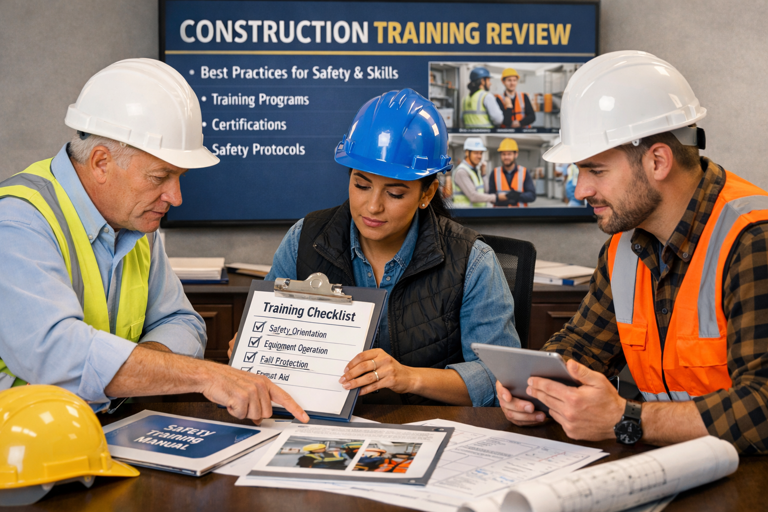
Construction is one of the UK's highest risk industries, which means employers have a legal responsibility to make sure everyone on site has the right training, understands the risks and knows how to work safely.
With workers moving between sites, subcontractors joining projects at short notice and site conditions changing throughout a build, delivering effective safety training isn't always straightforward. It's not enough to tick a box during induction and assume the job is done. Training needs to be relevant, easy to access and simple to keep up to date.
A well planned approach doesn't just help businesses meet their legal obligations. It can reduce accidents, improve consistency across projects, make audits less stressful and give clients greater confidence that safety standards are being maintained.
This guide explores practical ways construction employers can improve their safety training, strengthen compliance and build a safer working environment for everyone on site.
What Good Construction Safety Training Looks Like
1. Every Worker Starts with a Proper Site Induction
No two construction sites are the same, so every worker should complete an induction that's relevant to the site they're about to work on. Alongside the basics such as emergency procedures, welfare facilities and PPE requirements, inductions should explain the specific hazards, reporting procedures and site rules that apply to that location.
A consistent induction helps ensure everyone starts with the same understanding of what's expected, regardless of whether they're a permanent employee, agency worker or subcontractor.
Expert LMS allows employers to create site specific inductions quickly using CreAIt, while also providing ready made courses for standard health and safety topics. That means businesses can combine bespoke training with established learning content without creating everything from scratch.
2. Training Should Reflect the Work People Actually Do
Construction workers face very different risks depending on their role. A crane operator doesn't need the same training as a bricklayer and someone working in groundworks will encounter different hazards to someone fitting interiors.
Training should be relevant to the job, the equipment being used and the environment people are working in. When employees can clearly see how training applies to their day to day work, they're more likely to engage with it and retain what they've learned.
Career paths within Expert LMS make it easy to assign the right courses, checklists and risk assessments based on job role, location or project. This helps ensure workers receive the training that's relevant to them without managers having to allocate everything manually.
3. Competence Needs to Be Monitored, Not Assumed
Construction safety isn't something that can be covered once and forgotten about. CSCS cards, trade qualifications and other certifications all have expiry dates and allowing them to lapse can quickly become a compliance issue.
Keeping accurate records and receiving reminders before qualifications expire helps employers avoid unnecessary risk while ensuring workers remain competent throughout a project.
Skills, qualifications and certifications can all be tracked in one place, with automated alerts highlighting upcoming expiry dates so managers can act before compliance becomes an issue.
4. Strong Training Supports Your Reputation
Many principal contractors and clients now expect clear evidence that businesses have robust training processes in place before awarding work. Being able to demonstrate that employees are properly trained, competent and up to date with their qualifications can strengthen tender submissions and give clients greater confidence in your business.
Good safety training isn't simply about meeting legal requirements. It's also part of building a professional reputation and showing that health and safety is taken seriously across every project.
Best Practices for Construction Safety Training
Build Training Around the Real Risks on Site
Effective safety training starts with understanding the work people are doing. While every construction site has common hazards, the risks associated with each project, trade and working environment can vary significantly.
Rather than relying on the same generic training for everyone, employers should tailor learning to reflect the tasks workers carry out, the equipment they use and the hazards they're likely to encounter. This makes training more engaging and far more useful when it's time to put that knowledge into practice.
It's equally important to review training whenever site conditions change. New phases of a project, different contractors or updated methods of work can all introduce fresh risks that employees need to understand.
Expert LMS allows employers to create tailored career pathways based on role, site or project. Standard health and safety courses can be combined with bespoke content created using CreAIt, giving every worker training that's relevant to the job they're doing.
Keep Competence and Compliance Under Control
Managing training records manually becomes increasingly difficult as businesses grow. Between CSCS cards, trade qualifications, refresher courses and internal competencies, it's easy for something to be overlooked.
Having a central system to monitor qualifications gives employers confidence that workers remain compliant throughout a project. Automated reminders also reduce the risk of expired certifications slipping through the net, helping avoid delays, failed audits or workers arriving on site without the credentials they need.
Keeping everything in one place also makes it much easier to demonstrate competence when clients, principal contractors or inspectors ask for evidence.
Expert LMS tracks qualifications, certifications and competencies automatically, sending reminders before expiry dates and giving managers a clear overview of workforce compliance across every site.
Make Ongoing Learning Part of Everyday Site Safety
A good induction is essential, but it's only the beginning. Construction sites evolve quickly, and training should evolve with them.
Short refresher sessions, toolbox talks and updates on new equipment, procedures or legislation help keep safety at the forefront of everyone's mind. Delivering smaller pieces of learning throughout a project is often more effective than relying on lengthy courses completed months earlier.
Making training easy to access also plays an important role. Site based workers don't spend their day behind a desk, so learning should be available wherever they're working.
Through the mobile app, workers can complete training, access documents and receive important safety updates from site using their phone or tablet. Managers can also schedule refresher learning and highlight critical announcements to make sure important information isn't missed.
Don't Overlook Subcontractors
Many construction projects rely heavily on subcontractors, yet they're often managed separately from directly employed staff. Assuming everyone arriving on site has the correct training can create unnecessary risk.
Before work begins, employers should verify qualifications, check mandatory training has been completed and ensure subcontractors understand the site's specific rules and procedures. Applying the same standards across the entire workforce helps maintain consistency and improves overall site safety.
Expert LMS enables managers to review subcontractor training records, request supporting evidence and identify any outstanding requirements before workers arrive on site.
Keep Your Records Audit Ready
Whether it's an HSE inspection, a client audit or a prequalification questionnaire, employers are increasingly expected to provide clear evidence of workforce competence.
Training records should be accurate, easy to retrieve and kept up to date throughout the life of a project. Relying on spreadsheets, email chains or paper files often leads to unnecessary stress when information is needed quickly.
Having reliable reporting in place not only saves time but also demonstrates a more organised approach to health and safety management.
Expert LMS brings together training records, competency reports, certification histories and compliance data in one place. Reports can be generated or scheduled automatically, making it easier to share information with clients, principal contractors and stakeholders whenever it's needed.
Common Construction Safety Training Mistakes to Avoid
Even businesses with good intentions can develop gaps in their training over time. As projects become busier and deadlines tighten, it's easy for safety training to become a box ticking exercise rather than an ongoing part of site management.
Here are some of the most common mistakes employers make and how to avoid them.
Treating Induction as the Finish Line
A thorough site induction is essential but it shouldn't be the only formal training workers receive. Sites change, new risks emerge and working practices evolve throughout a project. Without regular updates and refresher training, important safety information can quickly become outdated.
Building short learning sessions and toolbox talks into everyday site operations helps reinforce good practice and keeps safety at the forefront of everyone's mind.
Relying on Generic Training for Every Worker
While every worker needs a solid understanding of core health and safety principles, not everyone faces the same risks. Generic training often overlooks the hazards associated with specific trades, equipment or project types.
The most effective training reflects the work people actually do, making it more engaging and far more likely to influence behaviour on site.
Losing Sight of Competence
Qualifications, licences and training records all need to be monitored throughout a worker's employment. Without a clear system in place, expired certifications can easily go unnoticed until someone is due to start work or an audit takes place.
Keeping competency records organised and up to date removes much of the administrative burden while reducing compliance risks.
Forgetting About Subcontractors
Subcontractors are often working alongside directly employed staff, yet their training records aren't always managed with the same level of scrutiny.
Checking qualifications, confirming mandatory training has been completed and providing a site specific induction helps ensure everyone on site is working to the same safety standards, regardless of who employs them.
Struggling to Produce Evidence When It's Needed
Training is only valuable from a compliance perspective if employers can demonstrate it has taken place.
Whether responding to an HSE inspection, a client audit or a prequalification questionnaire, businesses should be able to quickly access training records, competency reports and certification histories without searching through spreadsheets or paper files.
Good record keeping saves time, reduces stress and demonstrates a proactive approach to health and safety management.
Construction safety training isn't about completing a course and filing away a certificate. It's about creating a culture where people understand the risks around them, have the confidence to work safely and receive the right information throughout every stage of a project.
By combining structured inductions, role specific learning, regular refresher training and effective competency management, employers can improve compliance while creating safer, more consistent working environments across every site.
The right systems also make life easier for managers. Instead of spending valuable time chasing certificates, updating spreadsheets and preparing for audits, they can focus on supporting their workforce and delivering projects safely.
Expert LMS helps bring all these elements together in one place, giving construction businesses a straightforward way to manage training, monitor compliance and keep every worker up to date, whether they're in the office or out on site.
Frequently Asked Questions
What training is legally required for construction workers in the UK?
Employers have a legal duty under the Health and Safety at Work etc. Act 1974 to provide workers with the information, instruction, training and supervision they need to carry out their job safely. The exact training required will depend on the role, the work being undertaken and the risks involved.
Alongside site inductions, employers should ensure workers receive training relevant to their trade, any equipment they'll be using and the specific hazards present on site. Refresher training should also be provided whenever working practices, legislation or site conditions change.
How often should construction safety training be refreshed?
There isn't a single timeframe that applies to every type of training. Some qualifications have fixed renewal dates, while other topics should be revisited whenever risks change or new equipment and procedures are introduced.
Many employers schedule regular toolbox talks throughout the year and review mandatory training annually to make sure knowledge remains current. Keeping training up to date helps reinforce safe working practices and demonstrates an ongoing commitment to compliance.
What's the best way to manage training across multiple construction sites?
Managing training across several sites can quickly become difficult if records are spread across spreadsheets, emails and paper files.
Using a central learning platform allows employers to assign training, monitor progress, track qualifications and produce reports from one place, regardless of where employees are working. It also gives managers greater visibility of compliance across the business and reduces the administration involved in keeping records up to date.
How can employers make sure subcontractors meet the same training standards?
Subcontractors should be subject to the same safety expectations as directly employed workers. Before arriving on site, employers should verify qualifications, review relevant certifications and ensure site specific inductions have been completed.
Keeping these records in a single system makes it easier to identify any gaps before work begins and helps maintain consistent safety standards across the entire workforce.
What should be included in a construction site induction?
A good site induction should introduce workers to the specific environment they'll be working in, rather than relying on generic health and safety information.
Topics typically include site hazards, emergency arrangements, welfare facilities, PPE requirements, reporting procedures, traffic routes, restricted areas and any project specific risks. The aim is to make sure every worker understands both the site's rules and their own responsibilities before work starts.
How can employers prepare for an HSE inspection or client audit?
Good record keeping is one of the simplest ways to reduce stress during an inspection or audit.
Employers should be able to quickly provide evidence of completed training, competency records, qualification status and any refresher learning that has taken place. Keeping everything organised and readily accessible demonstrates a proactive approach to health and safety management and avoids the last-minute scramble to find paperwork.
Platforms such as Expert LMS can simplify this process by storing training records, certifications and compliance reports in one place, making it much easier to produce evidence whenever it's requested.
Construction safety training is about far more than meeting legal requirements. Done well, it helps reduce accidents, improves consistency across projects and gives workers the knowledge and confidence to carry out their jobs safely.
By delivering meaningful inductions, tailoring training to individual roles, keeping competencies up to date and maintaining clear records, employers can build a stronger safety culture while reducing the administrative burden that often comes with compliance.
Expert LMS supports that process by bringing training, competency management, documentation and reporting together in one platform. Whether you're managing a single site or coordinating teams across multiple projects, it provides the tools to keep safety training organised, accessible and easy to manage.
Every construction business is different, which is why your training platform should adapt to the way you work. Get in touch to see how Expert LMS can help you simplify compliance, reduce administration and keep your teams safe across every site.