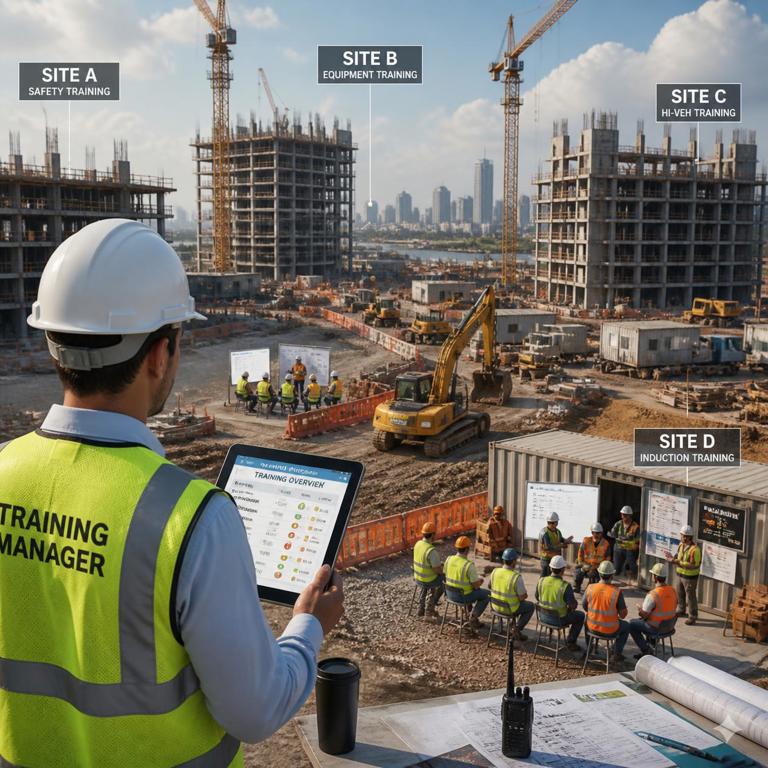
Construction businesses rarely operate from a single location.
Whether you're managing several live projects in one region or coordinating teams across the country, ensuring every worker has the right training, receives the latest information and follows the same standards can quickly become a complex task.
Employees move between sites, subcontractors join projects at short notice and site conditions change as work progresses. At the same time, managers need to keep track of mandatory training, communicate important updates and make sure everyone understands what's expected before stepping onto site.
Without a structured approach, it's easy for training to become inconsistent. Different sites may develop different ways of working, communication can become fragmented and valuable time is often spent chasing paperwork or confirming whether someone has completed the right learning.
The challenge isn't simply delivering training, it's ensuring the right people receive the right information at the right time, wherever they're working.
Fortunately, there are practical ways to simplify managing construction training without adding more administration. By standardising learning, improving communication and giving managers better visibility across projects, construction businesses can build a more organised, informed and capable workforce.
In this guide, we'll explore how to effectively manage training across multiple sites, improve construction workforce management and create more consistent construction operations from project to project.
What Good Construction Training Management Looks Like
Every Site Follows the Same Standards
No two construction sites are exactly alike, but your approach to training should be consistent across every project.
Every worker should begin with the same understanding of your company's expectations, safety culture and ways of working before moving on to site-specific information. While individual projects may have different hazards, access arrangements or emergency procedures, the core principles of your organisation should remain the same.
Consistency helps remove uncertainty. Workers know what's expected of them regardless of where they're working, managers spend less time explaining company procedures and clients gain confidence that standards are being maintained across every site.
It also makes it much easier for employees transferring between projects. Rather than learning a completely new process every time they move, they already understand the fundamentals and only need to familiarise themselves with the specific requirements of their new site.
Training Should Move With Your Workforce
Construction is one of the most mobile industries. Workers regularly move between projects as contracts begin and end, while contractors and agency staff may only be on site for a short period before moving elsewhere. Training needs to move with them.
When learning records are tied to individual sites or managed separately by different project teams, it becomes difficult to understand what someone has already completed. This often leads to duplicated training, unnecessary delays and additional administration for site managers.
A better approach is to place the individual at the centre of the training process. Wherever they work, their learning history, competencies and completed training should travel with them.
This allows managers to identify any additional learning required for a new project while avoiding the frustration of asking workers to repeat training they've already completed.
Communication Is Just as Important as Training
Even the best training programme loses its value if workers don't receive important updates once they're on site.
Construction projects are constantly evolving. Risk assessments are updated, work schedules change, new contractors arrive and site procedures are adjusted throughout the lifecycle of a project. Keeping everyone informed is just as important as delivering the initial training.
Too often, important information is shared through a mixture of emails, phone calls, noticeboards or messaging apps. While these methods have their place, they don't always guarantee that critical updates reach every member of the workforce.
Strong contractor communication helps ensure employees, subcontractors and agency workers all receive the same information at the same time. It reduces misunderstandings, improves collaboration between teams and helps maintain consistency across multiple sites.
When communication and training work together, businesses create a workforce that's not only competent but also informed, engaged and better prepared to respond to changes as projects progress.
Best Practices for Managing Construction Compliance Training Across Multiple Sites
Standardise Core Learning Across Every Project
Consistency is one of the biggest factors in successful managing construction training. While each project will have its own unique requirements, every worker should receive the same foundation of learning before stepping onto site. Company policies, health and safety procedures, reporting expectations and mandatory compliance training should remain consistent, regardless of where someone is working.
Once this core learning has been completed, businesses can build on it with project specific inductions, risk information and role based training.
This approach helps create a common standard across the organisation while reducing the amount of duplicated training managers need to deliver. It also gives workers confidence, as they know what to expect when moving between projects.
Rather than starting from scratch every time a new site opens, businesses can focus on the information that's unique to that location.
Keep Training Records in One Place
As projects multiply, so does the amount of information that needs to be managed.
Training certificates, completed inductions, toolbox talks, competency assessments and signed documents can quickly become scattered across spreadsheets, shared drives, filing cabinets and individual site offices.
When information is stored in different places, finding the evidence you need becomes time-consuming. Site managers may spend valuable hours confirming whether someone has completed mandatory learning, while office teams chase paperwork from multiple locations.
Keeping records in one central system provides complete visibility across the workforce. Managers can instantly see what training has been completed, identify outstanding learning and understand where additional support may be required.
It also creates a far more efficient onboarding process when workers move between projects, as previous training can be viewed immediately without relying on emails or paper records.
Strengthen Contractor Communication
Construction projects rely on collaboration. Permanent employees, subcontractors, agency workers and specialist contractors often work alongside one another, yet they don't always receive information in the same way.
Poor contractor communication can lead to misunderstandings, inconsistent working practices and delays when important updates aren't shared with the right people.
The most effective organisations treat communication as an extension of training. Site updates, revised procedures, new documentation and project announcements should all be distributed through a consistent process, ensuring everyone is working from the latest information.
Clear communication also helps create greater accountability. Workers know where to find important updates, managers know information has been shared and businesses reduce the risk of critical messages being missed.
Make Learning Accessible Wherever People Work
Construction workers aren't office-based, so training shouldn't depend on being in an office either. Whether someone is travelling between projects, working remotely from the site compound or preparing for a new contract, they should be able to access learning quickly and easily.
Mobile friendly training makes this possible. Workers can complete inductions before arriving on site, revisit procedures when needed and access important documents without waiting to return to a desktop computer. This flexibility helps businesses maintain momentum on projects while reducing delays caused by unavailable training or inaccessible information.
Making learning available wherever people work also encourages ongoing development, rather than limiting training to formal classroom sessions or annual refresher courses.
Improve Construction Workforce Management
Managing training is only one part of effective construction workforce management. Site managers also need visibility of who is qualified, who's completed mandatory learning and where potential skills gaps exist across the organisation.
Having this information available in real time makes planning far easier. Managers can confidently allocate workers to projects, identify additional training requirements before work begins and ensure teams have the right mix of skills for each phase of a project.
It also reduces the administrative burden placed on site managers. Instead of spending hours checking spreadsheets or requesting updates from different locations, they can make informed decisions using accurate, up to date information.
Ultimately, better visibility leads to smoother construction operations, helping projects stay organised while ensuring workers are properly prepared for the work ahead.
Even with the best intentions, managing training across multiple construction sites can become increasingly difficult as projects grow and workforces expand.
Workers move between locations, contractors come and go, and site managers are balancing training alongside countless other responsibilities. Without the right processes in place, small issues can quickly become larger operational challenges.
Here are some of the most common obstacles construction businesses face and how to overcome them:
Inconsistent Training Between Sites
When individual site managers are responsible for delivering training independently, it's natural for differences to emerge.
One site may deliver comprehensive inductions, while another focuses only on the essentials. Policies might be explained differently, important procedures could be overlooked and workers transferring between projects may receive conflicting information.
Standardising your core training helps ensure every employee starts with the same understanding of company expectations, regardless of where they're working. Site-specific learning can then build on this foundation without creating inconsistency across the wider business.
Construction projects rely on good communication, yet important updates are often shared through a combination of emails, messaging apps, noticeboards and verbal briefings.
The problem isn't a lack of communication, it's knowing whether everyone has actually received the message.
If workers aren't aware of updated site rules, revised procedures or changes to project plans, mistakes become more likely and productivity can suffer.
Creating a central place for contractor communication and workforce updates helps ensure everyone receives consistent information, wherever they're working.
Few things frustrate workers more than repeating training they've already completed. This often happens when learning records are managed separately by different sites or when managers don't have visibility of previous training.
Not only does this waste valuable time but it can also delay workers starting on new projects and create unnecessary administration for managers.
Keeping training records in one central system allows businesses to recognise previous learning, identify genuine gaps and avoid repeating courses that are no longer necessary.
Limited Visibility Across Multiple Projects
As businesses grow, maintaining oversight becomes increasingly difficult.
Managers may know exactly what's happening on their own site but have little visibility of training progress across the wider organisation. This makes it harder to identify overdue learning, plan future training or understand where additional support may be needed.
Having a central overview of workforce training gives decision makers greater confidence and allows issues to be addressed before they begin affecting project delivery.
Spending More Time Managing Training Than Delivering It
Training should support construction operations, not create additional administration.
Yet many businesses still spend hours updating spreadsheets, searching for certificates, confirming course completions and answering routine questions from site managers. As projects increase, so does this administrative burden.
Automating routine tasks and centralising information allows managers to spend less time on paperwork and more time supporting their workforce and delivering successful projects.
Managing training across multiple construction sites doesn't have to mean more paperwork, more emails or more complexity. With the right processes in place, businesses can create a consistent learning experience across every project while giving managers greater visibility of their workforce and workers easier access to the information they need.
Expert LMS has been designed to support modern construction businesses by bringing learning, communication, document management and reporting together in one intuitive platform. Whether you're onboarding new contractors, delivering site specific inductions or supporting teams across multiple projects, everything is managed from one central place.
If you're looking for a simpler way to manage construction training, improve communication and support more efficient construction operations, Expert LMS can help you build a more connected, informed and capable workforce, wherever your teams are working.